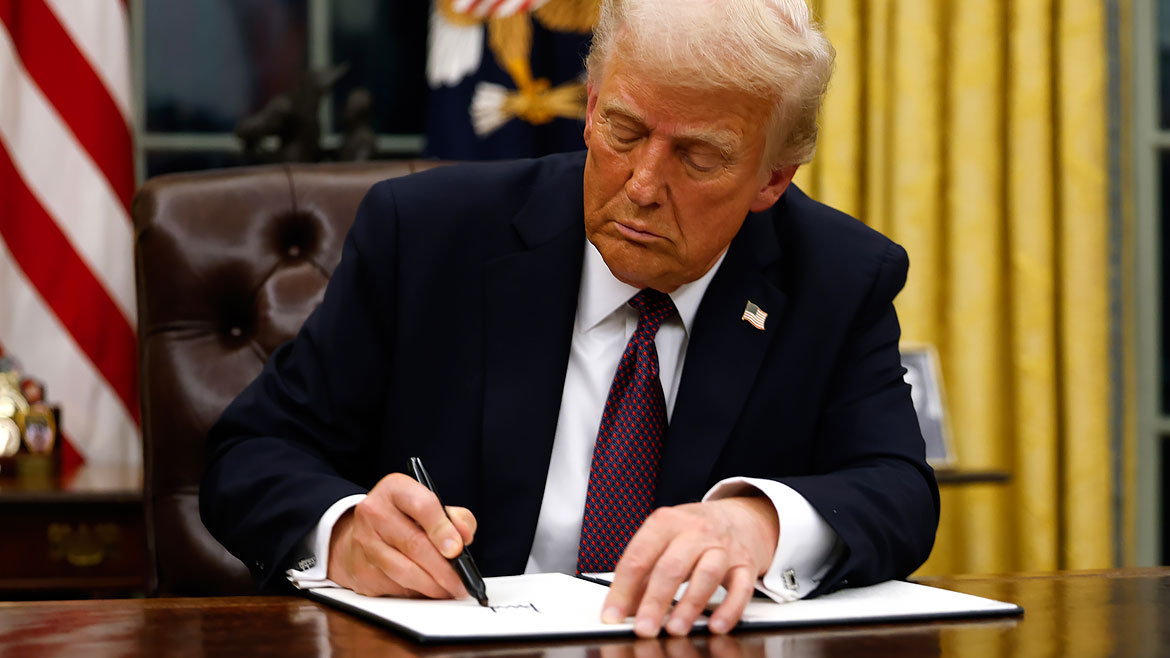
These orders deliberately undermine diversity, equity, inclusion, and accessibility and establish new hurdles to opportunity.
The three executive orders on diversity, equality, inclusion, and accessibility (DEIA) by the Trump administration use “shock and awe” to overturn established, bipartisan federal policy to open unfairly closed doors. President Donald Trump has worked hard in his first few days to obscure and weaponize civil rights laws that prohibit discrimination and provide equal opportunity for jobs, promotions, and education.
The administration is undoing decades of federal anti-discrimination policy from Democratic and Republican presidential administrations and using federal enforcement agencies to bully private and government entities into abandoning legal efforts to promote equity and remedy systemic discrimination. Trump’s executive orders violate the Johnson administration’s promises that corporations doing business with the U.S. government and receiving billions in public funds must meet the highest bias-reduction criteria.
How Do Orders Dismantle Decades of Federal Anti-Discrimination Policy?
Both parties’ governments have promoted equal opportunity through federal policy for decades. These policies expanded federal anti-discrimination laws from the 1960s civil rights movement to ensure that opportunity was not denied due to race, gender, sexual orientation, gender identity, disability, or other legally protected characteristics.
These policies were significantly altered by Trump’s executive orders, particularly in government contracting. Executive Order 11246, a cornerstone of equal opportunity policy for federal contractors since 1965 during the Johnson administration, is repealed without a replacement. This rapid change eliminates a provision that helped end race and sex segregation in high-paying industries limited to women and Black and Brown workers. It leaves companies negotiating a complex regulatory landscape, including Title VII and other regulations requiring government contractors to take affirmative action for veterans and disabled workers, which remain in effect.
How Will These Orders Target Workplace DEIA?
The orders use vague and menacing language to scare all employers, from private companies and federal contractors and grantees to state and municipal bodies, into abandoning DEIA efforts. The plan is to falsely associate diversity initiatives with prejudice to force everyone to remove them.
However, adequately structured DEIA programs in employment are allowed under federal and state civil rights statutes and longstanding legal precedents and are required to maintain compliance. DEIA programs are legal initiatives to build fairer workplaces and ensure opportunities aren’t limited by race, ethnicity, handicap, sex, sexual orientation, or gender identity. Many initiatives strive to improve fairer systems but do not employ specific applicants. For instance, recruiting at underrepresented universities or assuring promotion fairness addresses systemic inequalities without hurting anyone.
These initiatives are not discriminatory but crucial to fostering circumstances where everyone may flourish and removing career hurdles. Employers must reject political intimidation and accommodate all applicants, especially those facing unfair odds. Legal advocacy groups and state attorneys general have advocated for federal anti-discrimination statutes and race-neutral equality initiatives. Abandoning these initiatives risks inequality, alienating diverse talent, and breaching equal employment rules. The federal government should not intimidate and coerce firms into forsaking workplace equality.
What about schools and universities?
Executive orders target DEIA and essential processes in higher education and schools. These actions mischaracterize authorized equity programs as discriminatory in restricting education equality efforts.
In Students for Fair Admissions, Inc. v. Harvard, the Supreme Court gave colleges and universities many tools to promote educational equity. The judgment did not affect K-12 education, which must identify and remove impediments to equal learning.
Schools must follow federal and state civil rights laws that guarantee equal education. This entails checking policies and practices to avoid limiting chances based on race or other protected characteristics. Schools must provide an environment where all students can succeed in school. Educational institutions must fight intimidation and reaffirm their commitment to equal opportunity now more than ever.
What Next?
DEIA programs include many legal actions to make workplaces and schools fairer. Executive orders confuse authorized initiatives with discrimination, weaponizing enforcement to push institutions to quit essential programs and destroy federal contractor discrimination safeguards. No court has deemed DEIA unconstitutional, and President Trump cannot overturn decades of legal history.
Companies, schools, and institutions must oppose these presidential orders’ fear and confusion. Now is the time to double down on equal opportunity to ensure that everyone, regardless of background, can succeed. The ACLU continues to oppose these actions. DEIA improves education, grows businesses, and helps all communities prosper in our nation.